Structure-based protein design
Rational design grounded in 3D structural data — engineering proteins with precise function, stability and manufacturability in mind.
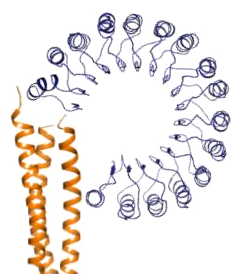
Structure-based design starts where sequence-only approaches run out of road: when questions about active-site geometry, binding interfaces, allosteric effects or real-world mechanical stress matter. We use crystal structures, cryo-EM data or high-quality predicted models as the foundation for rational engineering.
The first step is identifying hot spots — residues critical for function, stability, interface formation or aggregation. From there we design targeted single and combinatorial mutations and score them with physics-based energy functions and machine-learning predictors.
The second step produces curated variant lists with per-mutation rationale, predicted impact and risks. You see not just what to make but why — and can prioritize synthesis with full visibility.
Typical use cases: enzyme tuning for industrial and diagnostic applications, hyperstable scaffolds, binder design against difficult targets, and engineering of challenging membrane proteins.
Explore further
Five entry points into ProtoVela — from process and proof to the intro call.
Expertise
Services, molecule classes and scientific application areas in detail.
Why ProtoVela
Principles, optimisation targets and the eight-step design process.
About
Team, location and scientific leadership behind ProtoVela.
Blog
Field notes on AI, structural biology and protein design.
Contact
Book a free intro call and Project Assessment.