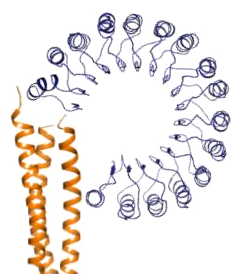
Seeing Biomolecules: Why Structural Biology Became a Strategic Biotech Capability
Cryo-EM, X-ray crystallography, NMR, mass spectrometry and computational modeling form the analytical backbone of structure-informed innovation.
Biotechnology depends on molecular specificity. Whether a team works on enzymes, binders, antimicrobial peptides or miniproteins, the relevant question is rarely only whether a molecule exists. The more strategic question is how structure, sequence, stability and function interact.
Structural biology provides that bridge. Experimental techniques such as cryo-electron microscopy, crystallography and NMR can reveal molecular architecture. Computational models add speed and breadth, especially when teams need to compare candidates, interpret mutations or prioritize experiments.
The 2017 Nobel Prize in Chemistry for cryo-electron microscopy illustrates how measurement technologies can change what is scientifically and commercially feasible. When structures become easier to resolve and interpret, design decisions become more explicit.
For biotech organizations, structural capability is therefore not a decorative scientific layer. It is a decision infrastructure: it helps teams allocate experiments, interpret failure and communicate why a candidate is technically plausible.